Publications
Ending Skin-NTDs in Ghana: Inside the ENIWEE Project
A comprehensive progress report — through February 2025
Why This Work Matters
Across Ghana's Bono and Upper West Regions, Neglected Tropical Diseases like Buruli Ulcer, Leprosy, Lymphatic Filariasis, and Yaws continue to affect some of the country's most vulnerable communities. These are diseases of poverty as much as biology: they thrive where clean water and sanitation are scarce, where stigma keeps people from seeking treatment, and where the disability and disfigurement they cause can push families deeper into hardship.
The ENIWEE project — Ending Skin-NTDs through Improved Water, Sanitation, Hygiene, and Economic Empowerment, was launched to break that cycle. Implemented by Sustainable Mission Aid International (SMAid International) with support from the Anesvad Foundation, the project works across five districts in the Bono and Upper West Regions, in partnership with Ghana Health Service, District Assemblies, the University of Energy and Natural Resources' NeTroDisOH Center, and local communities. Over its lifetime, ENIWEE aims to directly reach 150,000 people affected by Skin-NTDs and indirectly benefit 230,000 more across surrounding households and communities.
Rather than treating these diseases as a purely medical problem, ENIWEE organizes its work around four connected pillars: biomedical and health systems support, the social determinants of health, coordinated means of implementation, and public awareness and advocacy. This report walks through what's been achieved in each.
Community Voices
Hear directly from community members and health workers about the impact of the ENIWEE project.
Pillar One: Biomedical Aspects & Health Systems
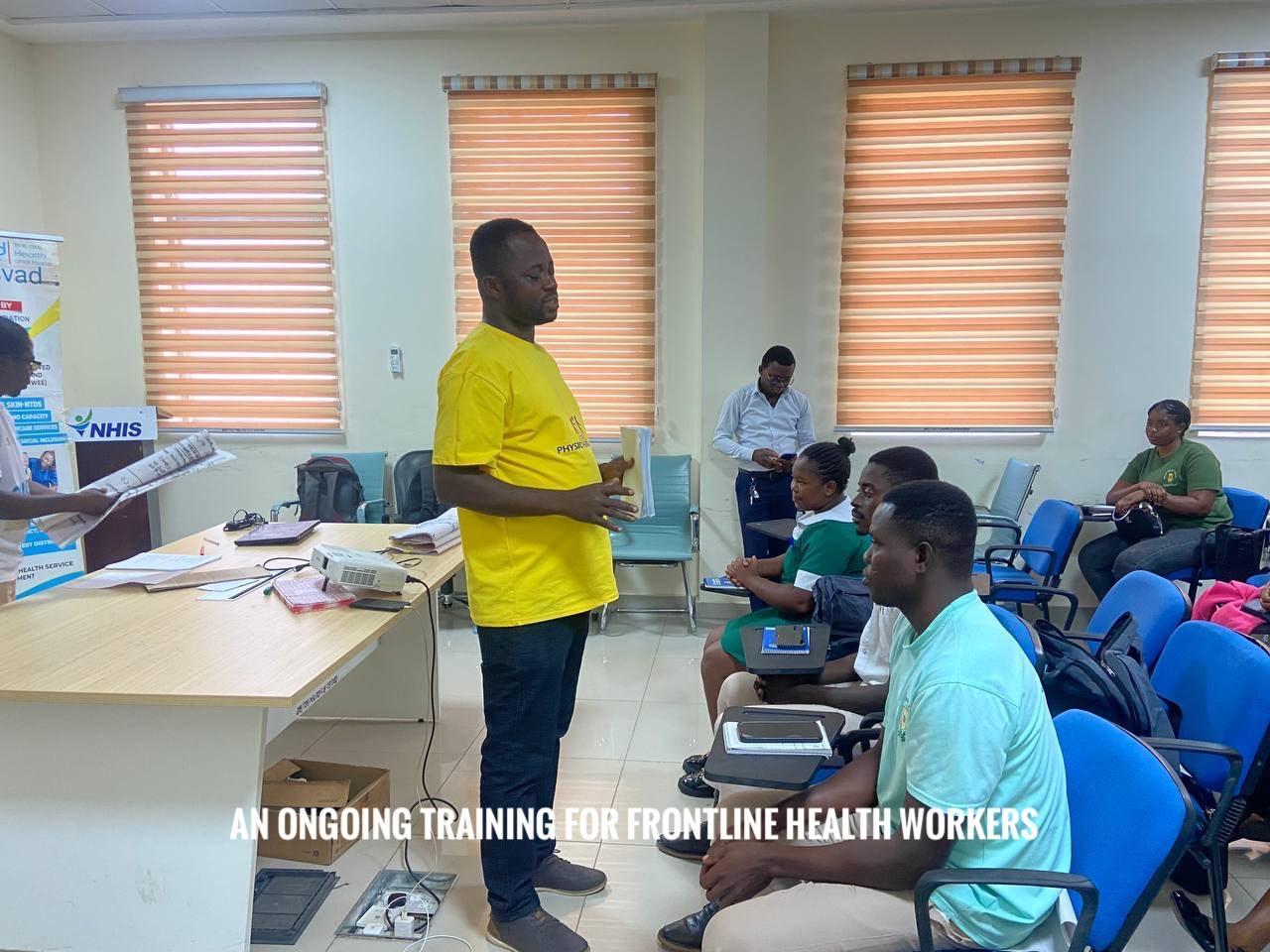
Building the front line's capacity. The project organized on-the-job training for Public Health and Mental Health Officers across all five implementation districts (Jaman South, Tain, Wa West, Wenchi, and Dormaa Central), reaching around 100 health workers with sharpened skills in both clinical recognition and mental health support. The goal was straightforward but important: equip the people patients already trust to spot Skin-NTDs earlier and respond to the psychological dimension of the disease — the shame, isolation, and fear that often keep people from seeking care in the first place.
Community-based support, backed by evidence. To design interventions that actually match people's needs, the project conducted vulnerability and psychosocial assessments across all ten target communities, integrating both into a single digital survey built with input from Ghana Health Service and the NeTroDisOH Center. Eight GHS nurses and mental health officers were trained in digital data collection and sensitive interviewing, and teams then visited all ten communities to gather data directly from affected individuals and their families. Beyond the data itself, the process had an unplanned but welcome effect: many participants said simply being asked, and being listened to, felt cathartic; an early signal of how much unmet emotional need exists in these communities.
From there, participants learned a simple, memorable framework for how to help: Look for early warning signs — a child kept home from school, a community member withdrawing, quiet rumors about a family; Listen without judgment, creating a safe space for someone to share their fears; and Link the person to care, whether that's a community health volunteer, the local clinic, or a mental health officer for more serious distress — and, crucially, to walk alongside them in doing so rather than simply pointing the way. Sessions closed with role-play exercises and concrete personal pledges — participants committing to specific actions like checking in on a neighbor who'd stopped coming to community gatherings. Feedback afterward captured the shift plainly: people moved from "I didn't know what to say" to "now I have a way to help."
Where the system is still catching up. Awareness is rising faster than the health system's current capacity to respond. Drug shortages and delayed laboratory confirmation of cases — including turnaround from national reference labs — are creating a gap between diagnosis and treatment that risks undermining the trust the project has worked hard to build. Advocacy with Ghana Health Service to expedite drug supply chains and testing turnaround remains an active priority.
Pillar Two: Social Determinants of Health
Skin-NTDs don't spread in isolation from poverty, poor sanitation, and social exclusion — so neither does the project's response.
Establishing peer support where it's needed most. Working with Ghana Health Service in-charges and Assembly members across ten communities, the project formed ten Community-Based Support Groups totaling 196 members — 110 women and 86 men — who now provide house-to-house sensitization and one-on-one psychosocial support to people affected by NTDs. The strong turnout of women in particular reflects real community buy-in for work that depends on trust built from within, not imposed from outside.
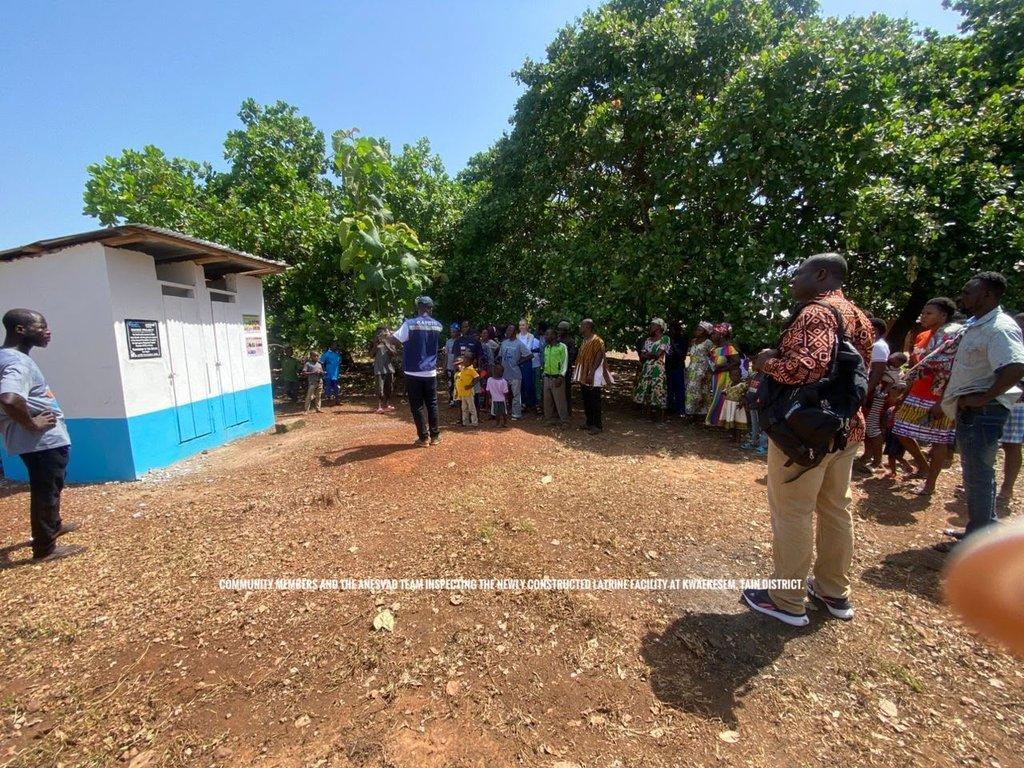
Closing the water and sanitation gap. Poor WASH infrastructure is one of the clearest drivers of ongoing transmission. The project conducted a full WASH assessment across priority communities, including Botenso, Zezera, Bodaa, Mfodwo, Kwaekesem, and Vieri — to map exactly where boreholes and latrines are most urgently needed, engaging traditional authorities, health workers, and support group members in the process. That assessment fed directly into a competitive procurement process, and construction contracts have now been awarded to begin closing the gap in communities that have gone without basic infrastructure for years. Alongside infrastructure, the project procured and distributed 115 WASH items, including hygiene supplies and sanitation materials to schools, health centres, and assembly offices across the district, so households have practical tools to act on hygiene education immediately, not just information.
Understanding vulnerability before designing solutions. Rather than guessing what affected families need, the project ran detailed livelihood and vulnerability assessments across all ten communities, timed carefully around the local cashew harvest so farming families could still participate. That evidence base is now informing the design of targeted vocational training, start-up capital support through Village Savings and Loan Association (VSLA) groups, and other economic empowerment interventions aimed specifically at women and individuals affected by NTDs.
Connecting people to systems that outlast the project. A recurring theme across community and stakeholder discussions has been how to link NTD-affected individuals to Ghana's existing social protection systems — the National Health Insurance Scheme (NHIS), the Disability Fund, and the LEAP programme — so that support doesn't disappear when the project ends. These conversations surfaced real friction: inconsistent experiences with NHIS coverage at different facility types, eligibility rules that exclude some conditions or require reaching a disability stage first, and confusion around LEAP's community-based selection process. Rather than treating these as someone else's problem, the project has taken on a direct advocacy role — working with Social Welfare departments to clarify referral pathways and encouraging health facilities to prioritize enrolling affected individuals so treatment is genuinely accessible.
Pillar Three: Means of Implementation
None of the above works without solid coordination, data, and knowledge-sharing behind the scenes — the less visible infrastructure that keeps a multi-district, multi-partner project running coherently.
A foundation for evidence-based decisions. Early in the project, SMAid developed a comprehensive Data Management Plan through stakeholder workshops and an assessment of data workflows, establishing clear protocols for data governance and security. Staff capacity was then built through a dedicated workshop, covering the full data lifecycle and a framework for data accuracy, completeness, availability, and timeliness, combining hands-on training in digital tools with personal action plans for applying what they learned.
Turning data into stories people can act on. Raw survey data means little without a way to communicate it. Through a collaborative two-phase process, first validating content with health professionals and district officials, then working with technical designers to turn that content into visuals, the project produced a suite of knowledge products: data stories, fact sheets, and a dedicated public dashboard sharing the project's baseline findings and ongoing assessments in accessible form.
Keeping five districts talking to each other. To sustain collaboration beyond formal meetings, the project established knowledge-sharing platforms in all five districts, bringing together Ghana Health Service officials, District and Municipal Assembly departments, media houses, and civil society partners on shared digital spaces. Setting them up meant real fieldwork, visits to each district to understand what stakeholders actually needed from such a platform, what topics belonged on it, and how to keep it focused and useful rather than becoming another unmoderated forum. The result: five active, moderated platforms where health officers, assembly staff, and media partners now exchange updates and troubleshoot problems between formal meetings.
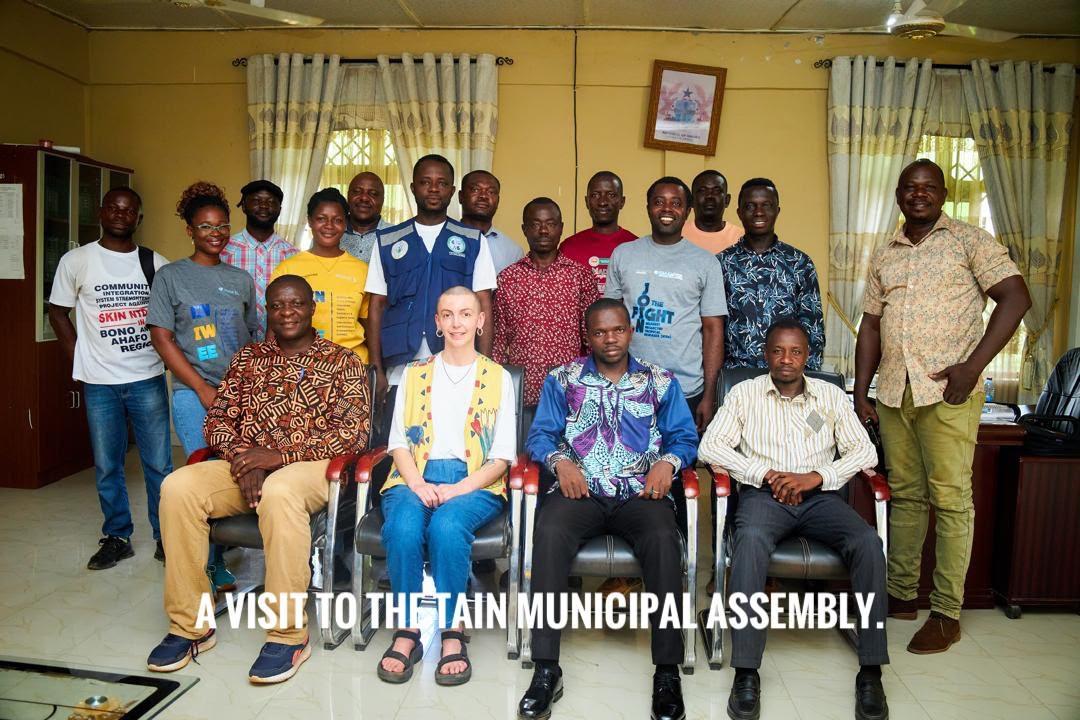
Multi-sectoral coordination from the start. The project's direction has never been set by SMAid alone. An early stakeholder engagement workshop brought together Ghana Health Service, the Department of Social Welfare, WASH NGOs, academia, media, and community leaders to review baseline survey findings and shape the project's roadmap through structured breakout discussions on WASH, healthcare systems, livelihoods, and advocacy, concluding with stakeholders formally signing a commitment charter. That same spirit of shared ownership has continued through regular quarterly monitoring visits and workshops with District Assembly and Ghana Health Service officials to keep NTDs prioritized in local health and development planning.
Pillar Four: Awareness and Advocacy
Even the best clinical and infrastructure work can be undermined by silence, stigma, or a lack of political attention — so building public awareness and institutional advocacy has been a parallel track from day one.
A strategy built with the people who'll carry it out. Rather than drafting an advocacy strategy in isolation, SMAid convened Ghana Health Service and Assembly officials for a full-day co-creation workshop, opening with a reminder that eliminating NTDs "cannot be the responsibility of focal persons alone" and grounding the discussion in a shared story of community members coming together to support one another. Participants worked through a SWOT analysis of the advocacy landscape and split into working groups to draft SMART goals, identify target audiences, and test key messages.
Turning commitments into budget lines. Advocacy only matters if it changes what institutions actually do. Following the strategy workshop, the project carried out a dedicated round of engagement across all five District and Municipal Assemblies, meeting specifically with Planning Units, Social Welfare departments, and Environmental Health Officers. The result was concrete: Assemblies confirmed the inclusion of NTD-related water and sanitation infrastructure in their 2026 development plans and budgets — moving NTDs from an external project's priority to a line item in local government's own planning.
Building a coalition beyond the health sector. Ten CSOs and NGOs and ten media houses were trained on Skin-NTDs, mental health, and WASH, and supported to develop their own advocacy and sensitization action plans — extending the project's reach well past what SMAid's own team could cover alone. Follow-up engagement with radio station management also secured formal commitments to provide ongoing airtime for Ghana Health Service health education as part of stations' corporate social responsibility work, a sustainability mechanism designed to keep public education going long after the project concludes.
The Throughline: Real Shifts in How Communities Respond
What ties these four pillars together isn't a single statistic but a visible shift in how communities are engaging with Skin-NTDs. Chiefs, elders, and local health workers are increasingly stepping forward as advocates rather than bystanders. Community members are more willing to recognize symptoms early and report them, rather than waiting until a condition has progressed. And local government bodies are beginning to fund NTD-related infrastructure from their own budgets rather than treating it purely as a donor priority. That progression — from silence to early action, and from project dependency toward local ownership — is exactly what a community-led, systems-focused health program is designed to achieve.
Challenges We're Addressing Honestly
Progress has surfaced hard realities alongside the wins, and transparency about them matters as much as celebrating what's working.
- Health system bottlenecks: rising demand for testing and treatment is currently outpacing drug supply and laboratory turnaround, risking the trust the project has built. Advocacy with Ghana Health Service to address this is intensifying.
- Infrastructure still catching up: many communities are still waiting for the boreholes and latrines that would meaningfully reduce transmission, even with contracts now awarded. Fast-tracking construction is a top near-term priority.
- Field logistics: reaching remote communities across five districts, particularly given poor road networks, remains a persistent operational challenge the project continues to work through.
Looking Ahead
In the coming period, the project will focus on translating groundwork into visible, lasting change: fast-tracking borehole and latrine construction in priority communities, pushing for faster laboratory turnaround and drug supply through continued engagement with Ghana Health Service, rolling out livelihood and economic empowerment interventions informed by this quarter's assessments, and building on the momentum of community-led advocacy and local government ownership that's beginning to take hold.
"Now I Have a Way to Help": Inside One Village's New Toolkit Against Stigma
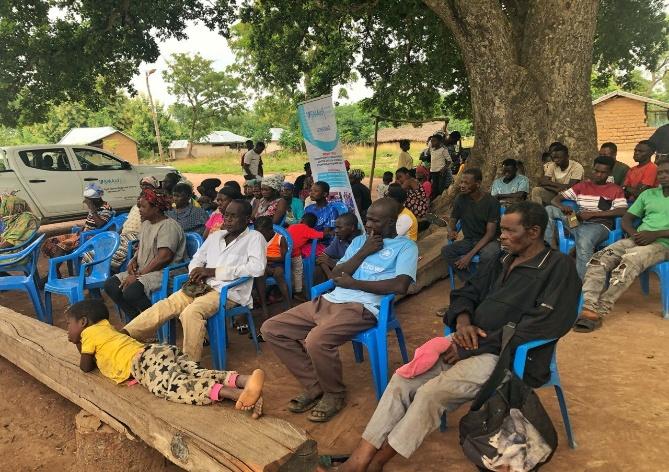
In Vieri, a small community in Ghana's Wa West District, a health facilitator recently demonstrated something most people there had never seen done outside a hospital: how to gently manage the swelling caused by lymphatic filariasis, one of the skin NTDs that has quietly shaped life in this part of Ghana for generations. He did it on a volunteer, in front of the room, hands guiding hands. No lecture could have taught what that one demonstration did.
The session was part of a training few outsiders would think to run this way. Before anyone talked about disease, facilitators asked a question: what challenges do you think someone with a severe wound or visible skin condition faces in our community? The room answered honestly: ridicule, exclusion from gatherings, loss of livelihood, and marriage rejection. Only after naming those experiences out loud did the facilitators introduce the words for them: "stigma," "discrimination," and "isolation." It's a small sequencing choice, but it matters. People don't absorb a concept until they've recognized it in their own lives first.
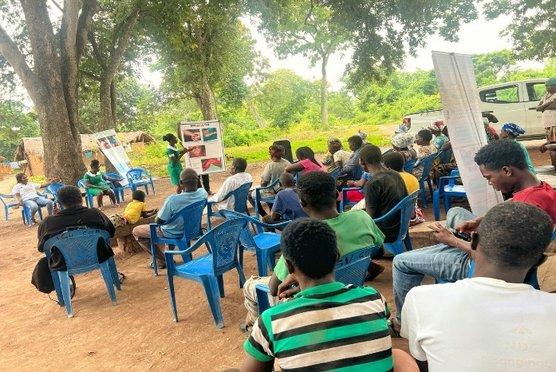
This is how SMAid International and Ghana Health Service have been building a network of community-based support groups across ten communities in the Bono and Upper West Regions as part of the ENIWEE project's fight against Buruli ulcer, leprosy, lymphatic filariasis, and yaws. The project's country programs manager, Theophilus Nti Babae, has described these trainings not as standalone events but as "a critical reinforcement of the community's own support system"—building on the community durbars that came before them.
The heart of each session is a simple framework participants now carry with them: Look, Listen, Link.
Look for the early, quiet signs: a child kept home from school, a neighbor who's stopped coming around, rumors circling a household. Listen without judgment, creating space for someone to voice a fear they've likely been carrying alone. And Link them to help, not by pointing toward a clinic from a distance, but by walking there with them.
Participants practiced it through role-play: one person playing someone newly diagnosed and hiding out of shame, another offering support using the framework, sometimes a third playing a skeptical family member. What started as an exercise often ended in something closer to real emotion — the kind of laughter and quiet recognition that tends to mean a lesson has actually landed.
Sessions closed with pledges, not certificates. "I will visit Kofi, who stopped coming to the farm." "We will include affected persons in our next funeral contribution group." Small, specific commitments, the kind that are easier to keep than grand ones.
Across the ten communities, 243 people completed this training. But the number that matters more is harder to measure: the shift facilitators heard again and again in the feedback afterward, from people who started the session unsure what to say to someone suffering and left it able to say something. As one participant put it simply: "Now I have a way to help."
That, more than any statistic, is what closing the gap between a health system and the people it serves actually looks like.
Voices from the Field
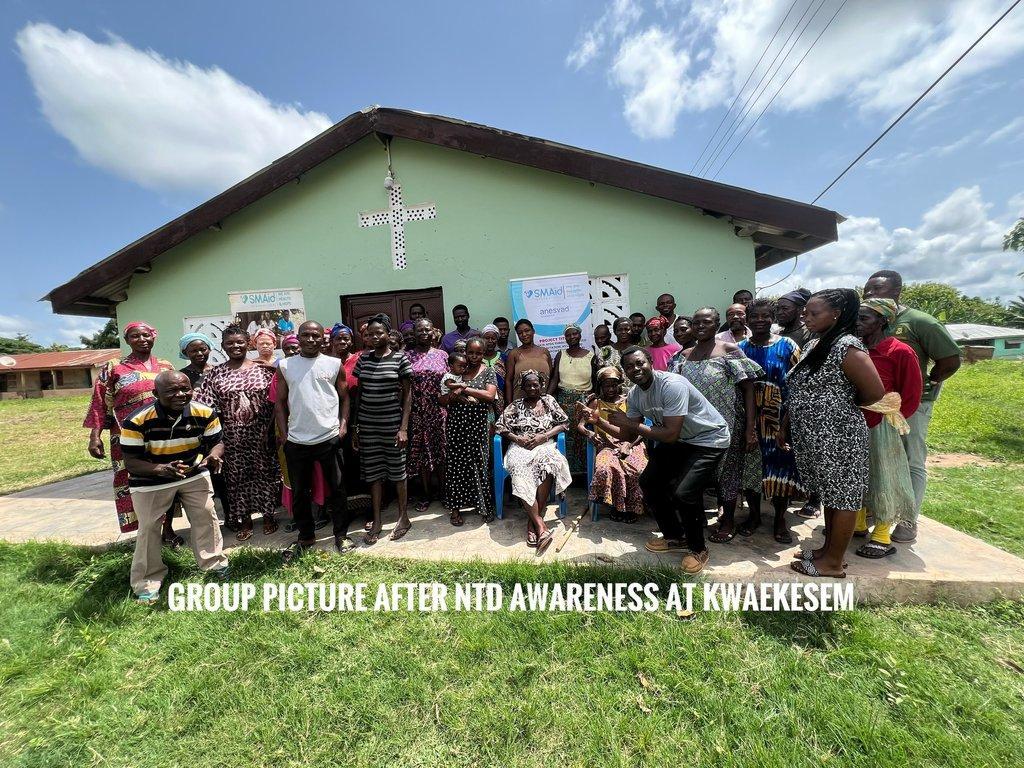
From Silence to Action: How Community Support Groups Are Bringing Hope to Those Affected by Skin NTDs
Community-led support · stigma reductionIn remote communities in Ghana's Bono and Upper West Regions, a powerful shift is underway. For years, people affected by Neglected Tropical Diseases (NTDs) like Leprosy, Buruli Ulcer, and Yaws suffered in silence, isolated by stigma and lack of understanding. But through the ENIWEE project, a new wave of community-led support is breaking the silence.
The project, implemented by SMAid International with funding from Anesvad Foundation, has established 10 Community-Based Support Groups comprising 196 dedicated volunteers. These groups are the heart of the initiative, providing crucial psycho-social support to individuals affected by NTDs. They are the trusted faces in the community, conducting house-to-house sensitization, offering a listening ear, and helping to connect those in need with health services.
Recently, these volunteers received intensive training on providing psychosocial support and tackling stigma. Equipped with the "Look, Listen, Link" framework, they are now better prepared to identify early signs of NTDs, offer empathetic support, and guide affected individuals to health facilities for care.
In Kwaekesem, the impact is already visible. Community leaders report that people living with NTDs are now being included in community activities, a stark contrast to the past when they were often shunned. One leader noted, "Community members are really against stigmatization because they recognize that NTD patients are the reason our community received water and latrine infrastructure."
This story is not just about fighting disease; it is about restoring dignity, fostering inclusion, and empowering communities to become agents of their own change. It represents a fundamental shift in perception, from attributing NTDs to spiritual causes to understanding them as treatable health conditions and is a testament to the power of community-led action.
Empowering the Frontline: Health Workers Gain Skills to Heal Beyond the Physical
Mental health · 4 A's frameworkFor a person diagnosed with a disfiguring skin disease, the physical wound is often only half the battle. The isolation, shame, and despair can be just as debilitating. Recognizing this, the ENIWEE project has invested heavily in strengthening the capacity of frontline health workers to address the profound mental health toll of Skin-NTDs.
In a series of comprehensive "on-the-job" training sessions across five project districts, 94 public health and mental health officers from the Ghana Health Service were equipped with a vital new tool: the "4 A's Stigma Conversation Framework." This practical framework—Ask, Acknowledge, Assess, and Advance—guides health workers in having compassionate, patient-centered conversations.
"Before the training, I often felt unsure of what to say to a patient who was clearly distressed and ashamed," shared one nurse from the Tain District. "Now, I have a structure. I can Ask permission to talk about their condition, Acknowledge their pain, Assess how it's affecting their life, and work with them to Advance a solution. It's transformed the care I can provide."
The training, which also involved role-playing and peer-to-peer learning, has created a network of health professionals who are now better equipped to offer more than just medical treatment, they are offering hope. The initiative has also strengthened collaboration between NTD and Mental Health units, fostering a more integrated and holistic healthcare approach. By healing the person, not just the disease, the ENIWEE project is ensuring that vulnerable individuals receive the comprehensive care they deserve.
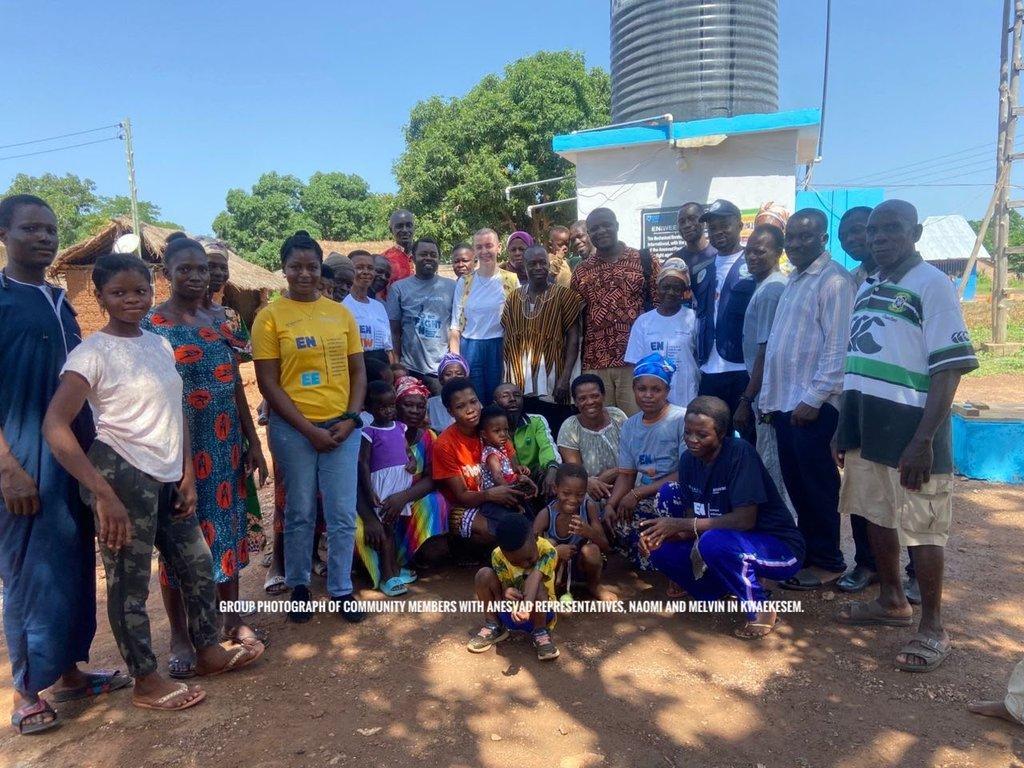
A Drop of Hope: WASH Infrastructure Transforms Communities and Prevents Disease
WASH · prevention · empowermentIn the fight against Neglected Tropical Diseases, access to clean water and sanitation is not a luxury; it's a cornerstone of prevention. The ENIWEE project has made significant strides in addressing these critical environmental determinants of health, transforming communities and reducing the risk of disease transmission.
Through a transparent and competitive procurement process, the project has awarded contracts to local construction firms to build three mechanized boreholes and a six-unit sanitation block in some of the most underserved communities in the Bono and Upper West Regions. These projects will provide safe water access to an estimated 5,000 to 10,000 community members, directly addressing the severe water scarcity documented in the project's baseline survey.
In communities like Botenso, Mfodwo, and Vieri, the need is acute. A recent WASH assessment, conducted through focus group discussions with 79 community members, found that in some areas, residents travel up to 90 minutes round-trip to fetch water from a stream, which they share with animals, a primary driver of disease transmission. The new boreholes will be a lifeline.
"Addressing WASH is both an intervention and a community priority," the project team observed. The need for safe water and sanitation was consistently and urgently raised by community members, who clearly linked it to their health and well-being. The impact, however, extends beyond health. In Kwaekesem, a community that received a borehole and latrine through the project, improved water access was directly linked to girls arriving at school on time; a powerful reminder of how WASH infrastructure empowers women and girls. By investing in these foundational structures, the project is building a healthier, more resilient, and equitable future for the communities it serves.